A better micro-market, built around your location.
NextShelf designs and fully operates office and facility micro-markets across Dallas-Fort Worth. We own the equipment and inventory, then handle stocking, payments, service, merchandising, reporting, and continuous optimization.
No equipment to buyNo inventory for your teamLocal DFW operation
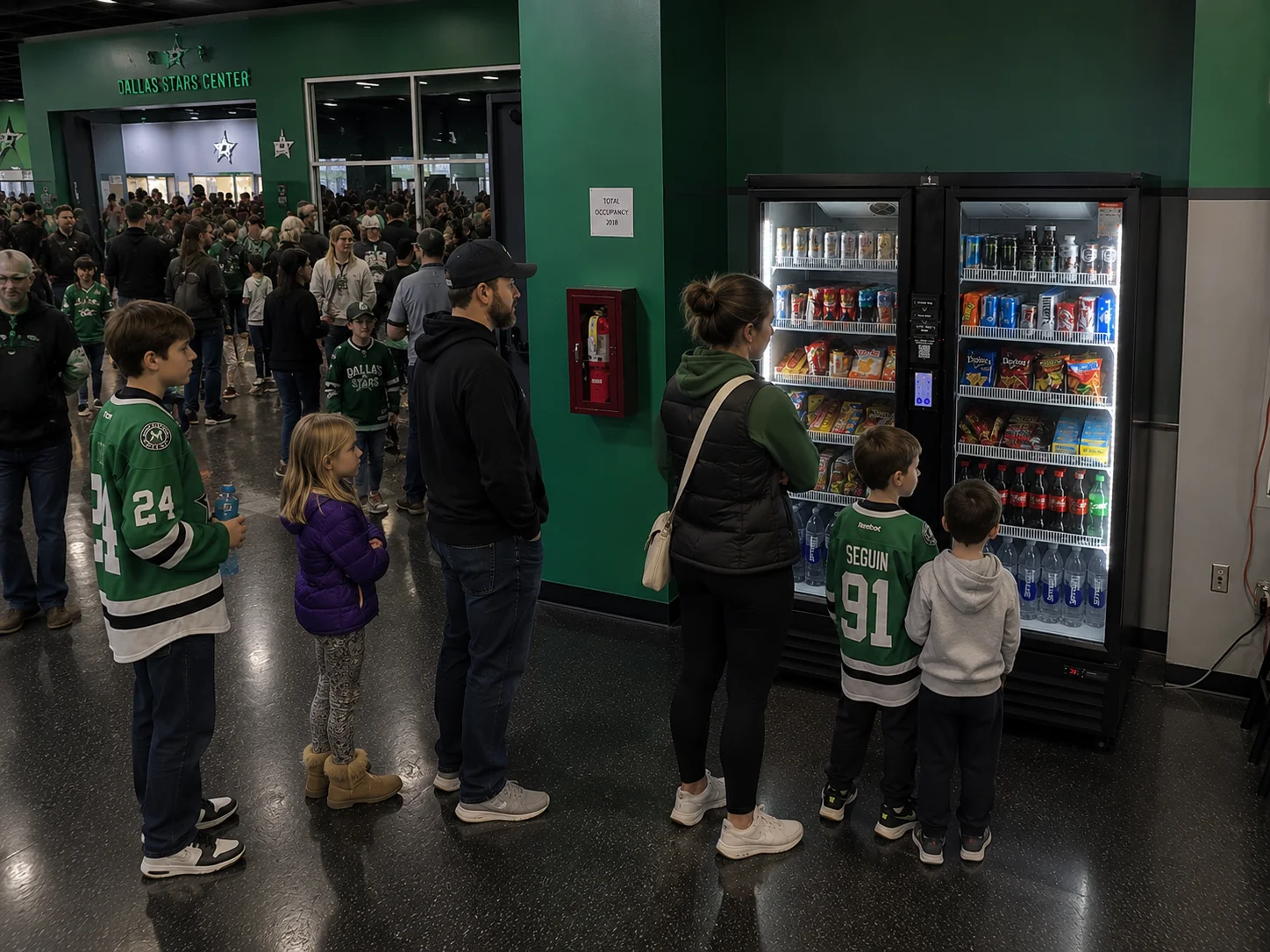
Live DFW operationDallas Stars Plano StarCenter
What a micro-market is
An on-site store people can use on their own schedule.
A micro-market brings open product access and self-checkout into the workplace or facility. It can support a wider assortment and a more natural multi-item purchase than a traditional vending machine, without requiring your team to staff a counter or run the store.
People see the assortment on open shelves and in refrigerated or frozen displays instead of choosing through a machine window.
02
Choose several items
Drinks, snacks, protein, fresh food, meals, and convenience products can be purchased together in one visit.
03
Pay at self-checkout
The customer completes the purchase without waiting for a staffed counter or asking an employee to ring up the sale.
04
Get back to the day
Employees, members, guests, or visitors get fast on-site access while the location's team stays focused on its own work.
When a micro-market makes sense
The footprint should earn its place.
NextShelf looks at the location as an operating system: who is there, when they buy, how much space is available, which categories matter, and what the current option fails to provide. The recommendation may be a compact market, a larger market, or a smart-cooler program.
Strong candidates often have:
Repeat employee, member, guest, or visitor traffic
Demand for a broader mix than one machine can carry
Visible, secure space with standard electrical power
Operating hours that make on-site access valuable
A need for fresh food, meals, or multiple product categories
A team that does not want to stock or run retail itself
Micro-market program formats
Compact, expanded, or full market. One operator behind it.
The scale changes with traffic, audience, hours, physical space, assortment needs, and demand. The operating responsibility does not: NextShelf designs, stocks, services, and improves the program.
01
Compact convenience
A focused market in a smaller footprint.
A concise self-checkout assortment for locations where space is limited but people still need a faster, more flexible alternative to one-item-at-a-time vending.
Focused assortment
Smaller market footprint
Managed stocking and service
02
Expanded grab-and-go
More choice for heavier, longer demand.
A broader program for larger teams, longer operating hours, and locations that can support more beverages, snacks, fresh food, protein, and meal options.
Broader product categories
More capacity for busy periods
Demand-aware replenishment
03
Full market experience
A complete on-site retail environment.
Open shelving, refrigerated and frozen capacity, self-checkout, and merchandising brought together around the space, audience, traffic, and buying patterns.
Your team gets the market. NextShelf runs the retail operation.
The service is not a kiosk or shelving package. It is the complete operating program, with one local team accountable from design through day-to-day performance.
Program format and placement planning
Equipment, installation, and launch
Product selection and inventory
Restocking and merchandising
Payments and sales reporting
Maintenance and service
Ongoing assortment improvements
Named DFW result
Dallas Stars Plano StarCenter
15x
15x the monthly revenue of the previous eight-machine vending bank.
Two coolers replaced eight vending machines. Revenue increased 15x.
NextShelf combined open-shelf shopping with SKU-level sales data, basket analysis, daypart and event patterns, disciplined replenishment, product testing, and custom-built machine-learning models that continuously tuned the assortment to what customers actually bought.
A frequently understocked vending bank became a 24/7 workplace amenity.
NextShelf replaced frequently understocked traditional vending with a managed workplace program spanning snacks, beverages, and grab-and-go meals. Employees gained a broader 24/7 selection, while NextShelf took responsibility for stocking, monitoring, service, employee product requests, and continuous assortment optimization.
An employee breakroom micro-market solves a different problem than a hotel lobby market or an event-driven facility. NextShelf builds the assortment and operating plan around the people at the location.
The right format is the one the location can support.
NextShelf is a full-service vending and micro-market operator, so the assessment is not built to force one format. We compare the traffic, space, hours, assortment, buying behavior, and operating requirements before recommending a program.
Traditional vending
Familiar and contained
A practical fit when the available footprint and expected demand call for a narrower assortment and one-item-at-a-time purchasing.
Best for: Locations with focused demand and limited space.
Managed smart cooler
Open-shelf access in a compact format
A strong fit when people need multi-item shopping, visible products, and fresh-food capability without a larger market footprint.
Best for: Visible smaller spaces with steady grab-and-go demand.
Managed micro-market
The broadest on-site selection
A strong fit when traffic, space, hours, and demand support open shelving, multiple product categories, and a fuller retail experience.
Best for: Workplaces and facilities that can support a broader program.
A clear launch. An operator who stays accountable.
The initial design matters, but a market earns trust through daily availability, service, merchandising, and decisions based on what people actually buy.
01
Assess the location
We review the facility type, daily traffic, operating hours, current vending setup, available placement, power, and the people most likely to buy.
02
Build the program
NextShelf recommends the program format, placement, opening product mix, and operating plan for the location.
03
Install and launch
We provide the equipment, prepare the inventory, install the program, configure checkout, and launch the location.
04
Stock, service, and improve
NextShelf manages inventory, restocking, maintenance, payments, reporting, merchandising, and ongoing product changes based on sales and demand.
Need a broader answer about service, location fit, or replacing a provider? Visit the full FAQ.
What is a workplace micro-market?
A workplace micro-market is an unattended on-site store with visible products and self-checkout. It can combine open shelving, refrigerated or frozen capacity, fresh food, meals, drinks, snacks, and convenience items in a format designed for the location.
What does NextShelf manage?
NextShelf designs the program and manages the equipment, inventory, stocking, payments, service, merchandising, reporting, product changes, and ongoing optimization.
What makes a location a good micro-market candidate?
Strong candidates usually have repeat traffic, a visible and secure placement, consistent operating hours, standard power, enough space for the intended format, and demand for broader on-site food, drink, or convenience access.
Does our team have to buy equipment or stock products?
No. NextShelf provides the equipment and owns the inventory as part of the managed program. Your team approves the location, provides standard power, and coordinates basic access when needed.
How is a micro-market different from vending machines?
Traditional vending usually offers a contained, one-item-at-a-time purchase. A micro-market can support open shelves, a broader assortment, multiple items in one transaction, and a more complete retail environment. The right choice depends on the location's traffic, space, hours, audience, and demand.
Does every location need a full micro-market?
No. Some locations are best served by a compact smart-cooler program, others by expanded grab-and-go, and others by a full market. NextShelf recommends the format that the location can support rather than forcing every site into the same footprint.
What happens after we request an assessment?
NextShelf reviews the location type, traffic, operating hours, current setup, available placement, service area, and goals. The next step is often a site walkthrough or a focused recommendation for the program format and operating plan.
Free location assessment
What would the right micro-market look like at your location?
Tell us about your traffic, operating hours, current setup, available space, and goals. We will assess the opportunity and recommend the format and operating plan that fit.
No equipment to buy.
No inventory or restocking for your staff.
No obligation to move forward after the assessment.